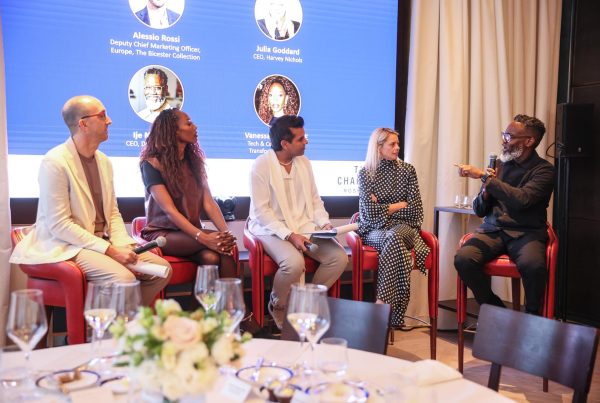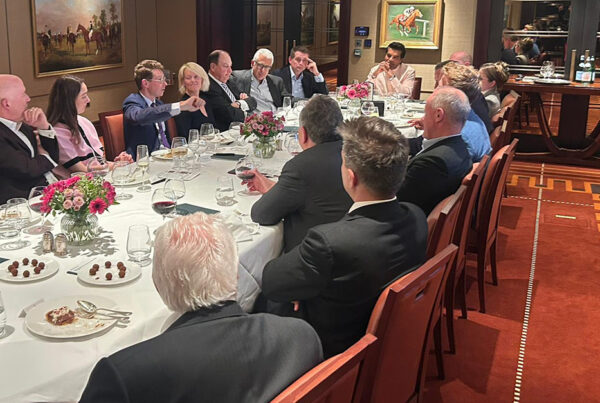


On Tuesday, 25 November, Audeliss and INvolve hosted an exclusive breakfast event at Harvey Nichols to examine one of the defining challenges in luxury: how to honor a brand’s storied heritage while expanding its appeal to an increasingly diverse and discerning consumer.
Harvey Nichols CEO Julia Goddard, alongside leading voices from across beauty, fashion, and luxury, shared insights on how shifting consumer behaviors, talent dynamics, and customer expectations are reshaping the sector — and what this means for the future of modern luxury.
Reclaiming heritage as a strategic asset
Across the discussion, heritage emerged not as nostalgia but as a contemporary lever of differentiation. Heritage was described as a living system: a set of enduring values, craft traditions, and brand codes that must be reinterpreted for relevance rather than preserved in stasis. The most successful modern luxury brands are those able to excavate their origins – founders’ intent, community ties, local production, craft lineage – and translate these into experiences and products that feel alive to today’s consumer. This work requires discipline: distinguishing what is sacred from what is adaptable, resisting reactive trends, and rooting decision-making in the original brand DNA.
The acceleration of culture and the collapse of control
A recurring theme was the irreversible shift from a one-directional brand model to a multi-directional cultural ecosystem. Speakers noted that digital commerce and social platforms have dismantled the traditional brand fortress: messaging is co-authored by consumers, ambassadors, communities, and critics. This creates both opportunity and vulnerability. Brands must identify the cultural “lanes” where they have legitimacy, accept that attempts to appear omnipresent can misfire, and commit to authenticity and consistency as stabilizing forces. The speed of culture often surpasses the speed of brand operations, making patience – a historic hallmark of luxury – harder yet more vital than ever.
Evolving notions of luxury across generations and geographies
The discussion underscored that luxury now means different things to different cohorts. Gen X historically consumed luxury for self-reward; Baby Boomers as a status signifier; Gen Z for digital currency and community belonging. Geography multiplies this complexity: a storytelling device that resonates in London may be opaque in Athens or Seoul. Brands increasingly require a “red thread”, a unifying brand essence, expressed through multiple cultural dialects. What remains constant across demographics is the premium placed on craft, quality, and provenance; elements increasingly valued as antidotes to digital saturation and fast consumer cycles.
The retail renaissance: experience as the new differentiator
Despite the dominance of e-commerce, there is a renewed desire for physical retail, not as a transactional site but as a sanctuary from digital overload. Consumers want discovery, sensory stimulation, and human connection. Department stores in particular must curate rigorously, simplify overstretched assortments, and create reasons to visit: good coffee, community-driven pop-ups, wellness spaces, and immersive storytelling. Yet experience without service fails; staffing, cultural fluency, and interpersonal confidence surfaced as critical enablers of inclusivity. Retailers must ensure that welcoming, non-intimidating environments are created through training, representation, and a refusal to make assumptions about who a luxury customer “looks like.”
Inclusivity and exclusivity: a structural paradox in luxury
Luxury’s historical exclusivity now coexists uneasily with consumer expectations of inclusivity. The panel articulated a paradox: today’s brands publicly champion openness, yet communities and tribes formed around them often reproduce a new type of exclusivity defined by belonging, codes, and insider knowledge. This tension is not fully resolvable. Instead, brands must navigate it consciously, ensuring accessibility in tone, service, price architecture, and cultural sensitivity, while maintaining the distinctiveness and aspiration that justify the category. Inclusivity is expressed not by diluting the brand but by widening who feels invited into the experience.
The pressure of dupes and the case for transparency
Mass-market “dupes” were discussed as both a threat and entry point to luxury. While copycat products challenge luxury’s pricing power, they also widen category participation, especially as it continues to be largely influenced and driven by social media. The panel emphasized that the only sustainable response is radical transparency: clearly articulating the research, formulation quality, supply chain ethics, and craftsmanship that underpin luxury pricing. Silence cedes the narrative to faster, louder competitors. In an era of mass comparison, luxury must defend not only its image but its substance.
Mindfulness, wellness and the exhausted consumer
A striking insight came from the emergence of wellness as a form of modern luxury. Younger consumers increasingly seek spaces, in stores and in brands, that deliver grounding, calm, and purposefulness. Rituals such as breathwork, meditation, and intention-setting are no longer niche; they are expectations. The convergence of fashion, beauty, wellness, and lifestyle suggests that the next chapter of luxury may be defined as much by emotional regeneration as by aesthetics or price point.
The discussion illustrates a luxury landscape in profound transition. Heritage is being rewritten for modernity; culture is reshaping brand power; generational and cultural nuances are fragmenting the audience; and retail is being reimagined as a site of belonging rather than consumption alone. Amid this flux, the defining task for leaders is to hold steady to their brand’s core identity while adapting with precision – resisting the pull of trend-chasing, investing in community and craft, and building inclusive experiences that honor the diversity of today’s luxury consumer. In this environment, brands that unite authenticity, patience, cultural intelligence, and human connection will set the new standard of luxury.