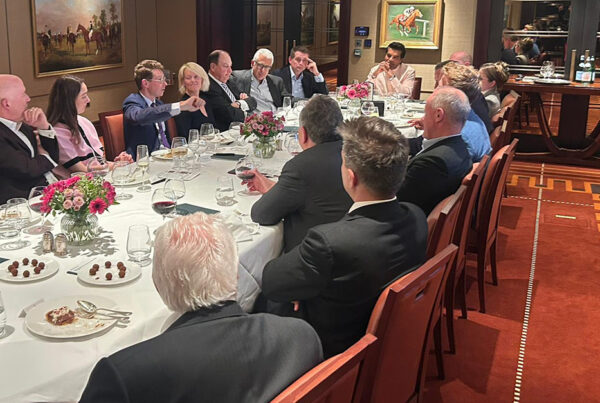

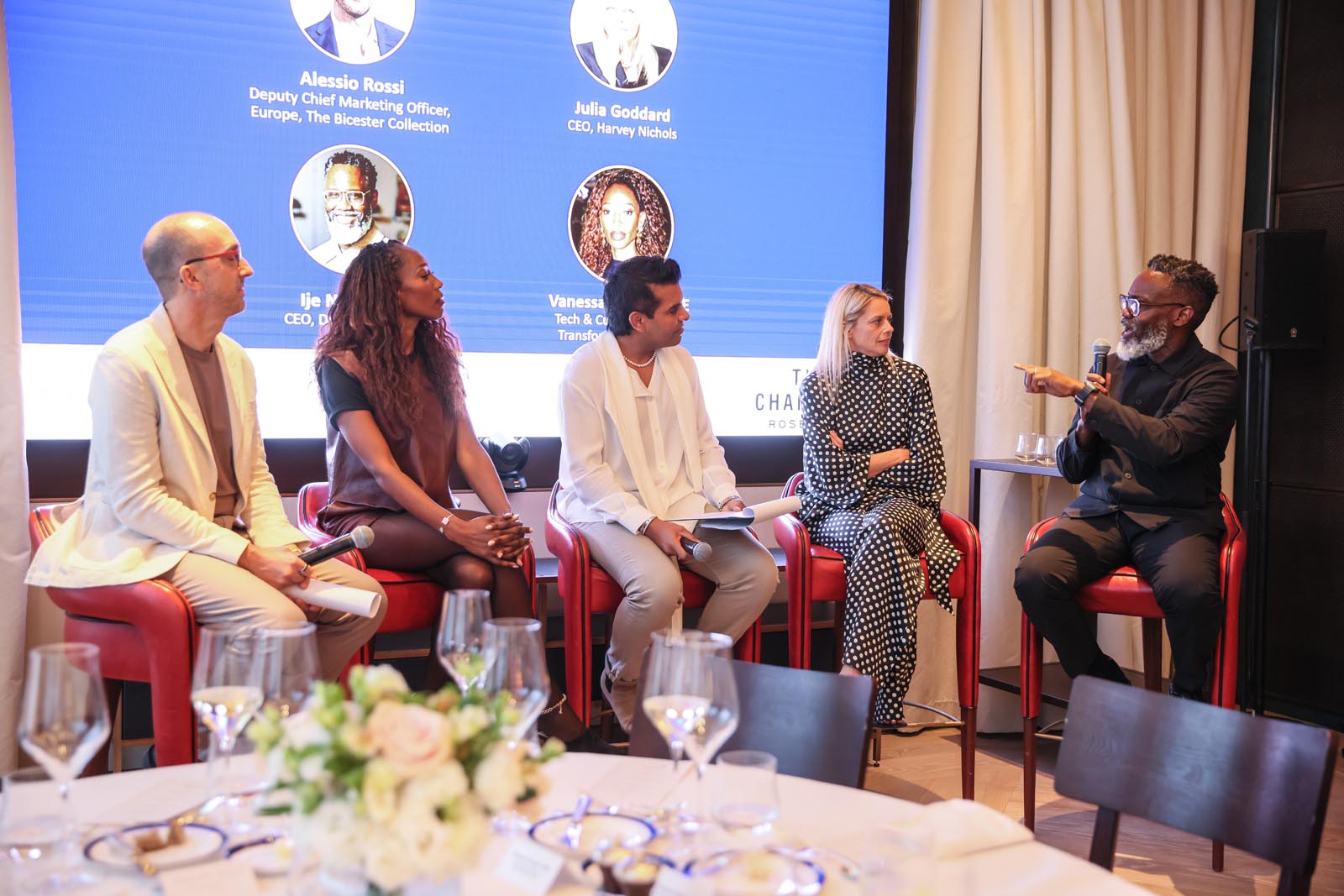

On 9 June, Audeliss, in partnership with The Bicester Collection, brought together a select group of CEOs and senior leaders across luxury, fashion, and beauty to explore how AI is reshaping an industry built on craft, desire, culture, and experience.
The conversation centered not on whether AI will enter the sector, but on where it should show up, how it should be used, and what leaders must protect when it comes to human connection and physical experience. For industries whose value depends on judgment, creativity, trust, community, and connection, the challenge is not simply technological adoption; it is how AI can strengthen a brand while ensuring it does not dilute the human qualities that make luxury meaningful.
Executive briefing by The Business of Fashion
Dan Hastings, Commercial Features Editor of The Business of Fashion, opened the discussion by framing AI as both an opportunity and a tension for luxury. While AI is already changing e-commerce, discovery, and personalization, luxury remains rooted in human instinct, craft, exclusivity, quality, and emotion.
The briefing highlighted the rise of generative search and agentic commerce, where AI tools may increasingly research, compare, and purchase on behalf of consumers. This creates a new visibility challenge for brands, as they will need to be understood not only by customers, but also by the AI systems shaping discovery.
At the same time, the briefing made clear that AI adoption must be handled carefully. In a market where consumers are already scrutinizing pricing, quality, supply chains, and authenticity, visible or careless use of AI can quickly undermine trust. The strongest opportunity may therefore lie in using AI behind the scenes to remove friction, support customers and enhance service, while keeping the human experience at the center.
Brand first, AI second
The discussion made clear that AI should not be treated as a strategy in itself. For luxury, fashion, and beauty leaders, the starting point must be the brand: what it stands for, what it promises customers, and what kind of experience it wants to create. AI can support that ambition, but it should not define it. The most effective use of AI will be the kind that strengthens desire, deepens connection, and protects the distinctiveness of the brand.
As AI capabilities become increasingly accessible, leaders noted that competitive advantage will come less from using the technology itself and more from maintaining a distinctive point of view. The real risk is not AI, but the gradual erosion of brand distinctiveness if every organization relies on the same tools, models, and approaches. Luxury brands will need stronger editorial judgment to ensure technology amplifies what makes them unique, rather than making them more alike.
Efficiency is only the beginning
AI is often discussed through the lens of speed, scale, and cost reduction, but the conversation challenged leaders to think beyond efficiency. In experience-led sectors, the greater opportunity is to free people from repetitive tasks so they can focus on higher-value work. This means using AI to create more space for judgment, creativity, service, and relationship-building. Efficiency only becomes meaningful when it helps people do more of the work that customers genuinely value. The discussion also reinforced that, in luxury, efficiency is not the end goal. AI creates the greatest value when it gives people more time to exercise judgment, build relationships, and deliver exceptional experiences. Competitive advantage ultimately comes from the depth of connection brands create with their guests and customers, not simply the speed or scale at which they operate.
Creativity needs human direction
The role of AI in creativity remains sensitive, particularly in industries built on originality, taste, and craft. However, the discussion challenged the idea that AI and creativity are naturally in conflict. Used well, AI can expand the creative process by opening up more sources of inspiration, enabling faster testing, and helping teams explore ideas that may previously have been too costly or time-consuming. The risk is not AI itself but using it to flatten creativity rather than stretch it.
Taste becomes a leadership skill
One of the strongest reflections was that AI can produce work that looks polished but still feels wrong for the brand. This makes human judgment more important than ever, not less. Taste becomes a form of governance. Leaders need teams who can question outputs, challenge “good enough” work, and recognize when something is technically effective but emotionally or strategically misaligned or empty.
Trust cannot be automated
Trust is one of the biggest risks for luxury, fashion, and beauty brands using AI. Consumers are already more alert to issues around quality, pricing, authenticity, supply chains, and sustainability, and AI adds another layer of scrutiny. The key question is not simply whether AI has been used, but whether its use feels appropriate. In many cases, the strongest applications may be invisible, supporting personalization, relationship-led service, and more thoughtful customer experiences without replacing the human connection.
Physical experience matters more
The conversation reinforced the growing importance of physical experience in a digitally saturated world. Stores, villages, pop-ups, and events should not be seen simply as distribution channels, but as places where the brand becomes tangible in an increasingly intangible and digital world. Customers increasingly want discovery, advice, inspiration, and community. Technology can support this by giving teams better insight, but the value lies in the human experience it enables.
Leaders agreed that digital and physical experiences should not compete, but complement one another. AI can help create relevance, anticipation, and confidence before a visit, but the physical experience itself must deliver something technology cannot: genuine human connection, emotional resonance, and memories worth returning for. The most effective use of AI is often the least visible, supporting the experience rather than becoming the experience.
Human connection is the luxury
In luxury, fashion, and beauty, human connection remains one of the most powerful differentiators. The ability to read a customer, respond to emotion, and create a sense of care cannot be easily automated. This applies internally as well as externally. As AI changes how teams work, leaders must protect the conversations, collaboration, and human relationships that shape culture and creativity.
The discussion also highlighted the growing importance of community and belonging. As more interactions become digital and automated, brands that create places, experiences, and relationships where people feel recognized, connected, and part of something larger will become increasingly valuable. In an AI-enabled world, fostering genuine human communities may become one of luxury’s most enduring competitive advantages.
Responsible redesign of work
The discussion also raised important questions about jobs, skills, and future talent. AI may remove repetitive work, but leaders must consider what learning, development, and judgment may also be lost in the process. The responsibility sits with leaders to redesign work thoughtfully. The aim should not be to turn people into passive users of technology, but to help them become more creative, more capable, and more valuable contributors in an AI-enabled world.
Conclusion
The event highlighted that AI will not define the future of luxury, fashion, and beauty on its own. The defining factor will be how leaders choose to use it. The strongest brands will be those that use AI to remove friction without removing meaning. They will use technology to support creativity, not flatten it. They will use data to enhance service, not replace human connection. They will protect trust by being clear about where AI belongs, where it should remain invisible, and where human judgment must lead.
In industries built on desire, taste, craft, culture, and community, AI should not be treated as a substitute for human value. Its real potential lies in helping brands create more space for the human qualities customers will continue to seek: originality, care, connection, and experience.