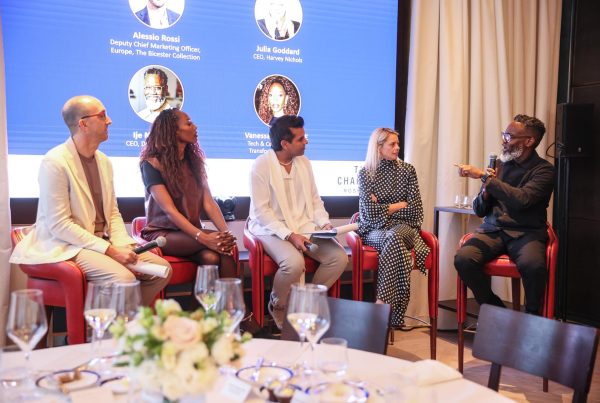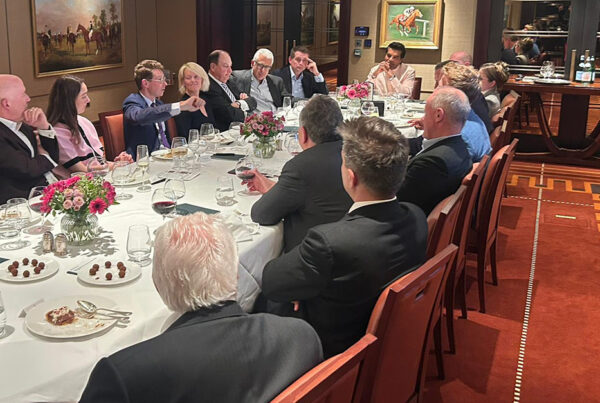


On 10 July, Audeliss hosted an intimate and thought-provoking dinner for CEOs and Chairs as part of our In Conversation With series. The evening featured a candid and wide-ranging discussion between Lord Charles Allen of Kensington CBE, Chair of THG and Balfour Beatty, and Advisory Chair of Moelis & Company, and our Founder and CEO, Suki Sandhu OBE.
Held shortly after Pride Month and amid growing global scrutiny and political resistance to diversity, equity, and inclusion (DEI), the event offered senior leaders a chance to reflect honestly on the shifting role of DEI in business. From navigating reputational risks to embedding inclusive culture without political backlash, the conversation struck a careful balance between pragmatism and purpose.
Bringing together influential UK business leaders, the event provided a rare opportunity for open dialogue on how to lead with integrity while responding to internal and external pressures.
Navigating political and social backlash
The central thread of the conversation was how the evolving political and social climates in both the UK and the U.S. are shaping corporate decisions. Leaders discussed the tension between standing firm in their values and the growing risk of backlash, particularly in regions where progressive inclusion efforts are becoming increasingly politicized.
Some organizations shared that they are moving toward a quieter, more integrated approach to DEI: embedding inclusive practices into everyday business without labelling them as such. While this can feel like a retreat from visible advocacy, it was framed by several attendees as a strategic necessity in certain markets.
The strategic value of DEI
Despite the challenges, the group reaffirmed that DEI is not just about compliance or values; it’s a commercial imperative. The conversation repeatedly returned to the business case for diversity, with examples ranging from improved decision-making at board level to the expansion of market reach through more inclusive branding and communications.
Rather than framing DEI as a zero-sum game, many emphasized the importance of inclusive cultures that celebrate talent and passion, rather than meeting quotas or ticking boxes. In fact, efforts to enforce targets without cultural buy-in were seen as potentially alienating to the very groups they aim to support.
DEI as a talent imperative
Several CEOs reflected on the expectations of younger generations, especially Gen Z, who increasingly view inclusion, equity, and social impact as non-negotiable. These employees are not just choosing workplaces based on salary or prestige; they’re looking for alignment with their personal values.
Examples were shared of younger employees and graduates pushing back against leadership decisions that seemed out of step with inclusion commitments. For businesses hoping to attract and retain top talent, embedding inclusion into organizational culture, not just policies, is becoming a core competitive advantage.
Responding to internal and external pushback
Leaders also discussed the growing resistance to DEI, both from within their organizations and from external stakeholders. In some cases, setting explicit diversity targets backfired, with employees expressing a desire to be recognized for merit rather than metrics. Others spoke about concerns from boards or shareholders around reputational risk when taking public stances.
The most effective approach, it was agreed, is to embed inclusion into company culture rather than treat it as a separate initiative. Framing DEI as core to talent, innovation, and long-term growth helps maintain focus and reduce polarization, especially in challenging climates.
The global dimension: cultural and legal tensions
Many in the room spoke to the realities of operating across multiple markets, where cultural and legal norms around DEI vary dramatically. Leaders shared their experiences navigating inclusion strategies in countries where certain identities remain stigmatized or even criminalized.
There was acknowledgement that businesses often “duck” or soften DEI reporting and activity in global operations to avoid legal or reputational conflicts. While far from ideal, this was described as a dilemma without easy answers, balancing ethical responsibility with employee safety, operational continuity, and shareholder expectations.
The need for coalitions and alignments
A standout message from the discussion was the importance of solidarity among businesses. Drawing on examples from various industries, attendees discussed how coordinated responses are more effective when individual organizations come under political or public scrutiny.
Many suggested reframing DEI under the banner of responsible business or ESG, positioning it as part of a broader framework of corporate integrity and risk management. This helps ground inclusion efforts in language that is both strategically sound and ethically aligned, while reducing conflict.
What emerged from the evening was a clear understanding that the future of DEI depends not on volume, but on authenticity, cultural integration, and consistency. The organizations best positioned to lead on inclusion are those who view it not as a side initiative, but as a lens through which every part of the business is run, from hiring to product development to customer service.
The reflections, though varied, centered on a shared commitment to resilience, adaptability, and fairness. DEI, when rooted in business outcomes and human understanding, remains a powerful force for progress even in uncertain times.