

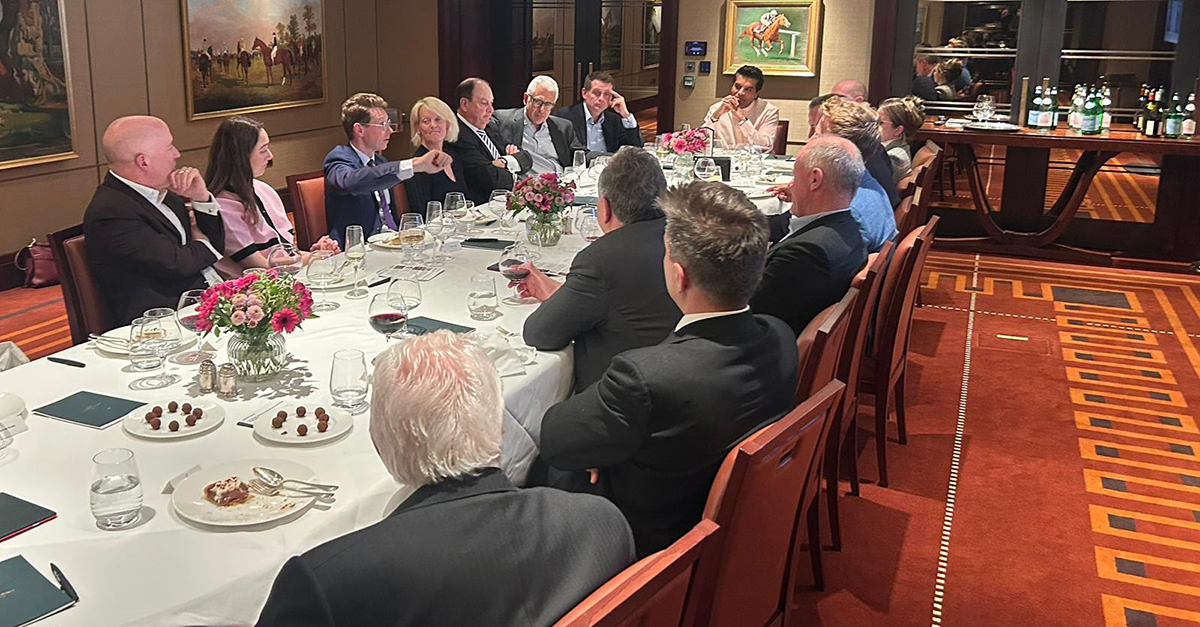

On 13 May, Audeliss, Clifford Chance, and Newcome Advisory hosted an exclusive dinner for CEOs and Chairs at The Beaumont Mayfair.
The evening centered on a conversation with Sir Andy Street on the future of UK growth. Drawing on his experience as Managing Director of John Lewis, his two terms as Mayor of the West Midlands, and his current work with Baroness Ruth Davidson through Prosper UK, the discussion explored how the UK can rebuild confidence, improve productivity, and create a more pro-business environment.
Guests reflected on the economic and political conditions shaping business sentiment, from investment and policy stability to planning reform, technology, talent, and the UK’s international competitiveness. Across the conversation, one theme was clear: unlocking growth will require closer partnership between business, policymakers, and institutions, as well as a renewed commitment to long-term thinking and practical delivery.
Rebuilding confidence in the UK growth story
The discussion reflected a clear unease about the current state of the UK economy, with many leaders pointing to uncertainty as a major barrier to confidence. This was not simply about short-term market conditions, but about a wider concern that businesses are being asked to make long-term investment decisions in an environment where policy direction, political stability, and economic priorities can feel unclear. What came through strongly was that confidence needs to be rebuilt intentionally. For growth to accelerate, businesses need more than reassurance; they need a credible sense that the UK is committed to creating the conditions in which investment, hiring, and expansion can thrive.
The UK’s challenge is conversion, not capability
One of the strongest reflections from the evening was that the UK continues to possess significant competitive advantages. Its universities, talent base, technology ecosystem, financial services expertise, creative industries, and international reputation remain important sources of strength. Yet the discussion repeatedly returned to the gap between having these assets and turning them into productivity, growth, and global competitiveness. This distinction matters because it reframes the national challenge. The issue is not that the UK has nothing to build on, but that its systems, incentives, and policy environment often prevent strong foundations from becoming sustained economic advantage.
Creating a more pro-business and investment-led environment
The discussion made clear that business leaders are looking for a more consistent and constructive relationship between government and enterprise. A pro-business environment was not framed simply as lower taxation or lighter regulation, but as a broader mindset that recognizes business as central to national growth. This includes policy stability, stronger incentives for investment, a clearer approach to wealth creation, and a willingness to involve business more directly in shaping practical solutions. The conversation also reflected on the UK’s ability to create strong businesses, but not always to scale and retain them. If the UK wants to retain high-growth companies, it needs a stronger capital ecosystem, better incentives for founders and investors, and a culture that is more comfortable with risk, reward, and commercial ambition.
Long-term decisions, public finances, and productivity
A recurring theme was whether the UK’s political structures are capable of supporting the long-term decisions required for sustainable growth. Many of the issues discussed, from productivity and planning reform to pensions, welfare, infrastructure, and defense, cannot be resolved within a single electoral cycle. This creates a tension between what the country needs over the next decade and what political systems are incentivized to prioritize in the short term. The guests also explored the balance between public spending commitments and the need for future investment, with a clear recognition that financial discipline and investment cannot be treated as opposing ideas. The UK needs a more sophisticated conversation about how to control day-to-day spending while protecting the capital investment required to improve productivity, infrastructure, competitiveness, and resilience.
Removing practical barriers to growth
Planning reform was discussed as a tangible example of how the UK can remove barriers to growth. The point was not only that the current system slows housing, infrastructure and development, but that delays create wider consequences for investment and competitiveness. The discussion highlighted the need for more practical, delivery-focused reform, including clearer decision-making processes, better resourcing, and more effective use of technology. More broadly, this reflected a recurring frustration with systems that prevent delivery. Productivity, housing, infrastructure and regional growth all depend on the ability to move from ambition to execution, and the UK’s competitiveness will be shaped by how quickly it can remove the friction that slows investment and development.
Technology, AI, and the opportunity for renewed competitiveness
Against a more cautious economic backdrop, technology and AI provided one of the more optimistic themes of the evening. The UK continues to attract global technology businesses, investment, and highly skilled talent, and there was recognition that this remains one of the country’s strongest growth opportunities. However, the discussion also suggested that optimism must be matched by execution. The UK cannot rely on its reputation or talent base alone. To turn technology leadership into national growth, it must create the conditions for companies to build, scale, and remain in the UK, while ensuring that investment in AI and emerging technologies is connected to broader industrial and economic strategy.
Global openness, talent, and national resilience
The discussion returned several times to the importance of attracting capital, entrepreneurs, and globally mobile talent. In an increasingly competitive international environment, the UK must be intentional about the signals it sends to those who can choose where to invest, build businesses, and create jobs. This is also linked to the need for a practical and economically focused international outlook, particularly around trade, business relationships, and the UK’s relationship with Europe. Defense and national resilience were also raised as both strategic challenges and potential areas of opportunity, reinforcing the point that growth cannot be separated from national capability, security, and preparedness. The opportunity for the UK lies in connecting openness, investment, and resilience as part of a wider growth strategy.
The role of business leadership in shaping the debate
One of the final messages from the evening was that business leaders cannot remain passive in the national growth conversation. There was a clear sense that business has a responsibility to contribute evidence, challenge assumptions, and help shape practical solutions. This does not mean becoming overtly political, but it does mean being more vocal about the conditions required for investment, job creation, and competitiveness. The discussion suggested that silence from business can leave space for weaker policy thinking to dominate. If growth is to become a serious national priority, business voices need to be more confident, constructive, and coordinated.
The evening made clear that the UK’s growth challenge is not rooted in a lack of potential. Across talent, innovation, technology, capital markets, universities, and international influence, the country still has many of the ingredients required to compete globally. The more pressing question is whether those strengths can be supported by the right policy environment, investment conditions, and leadership mindset to turn potential into long-term economic performance.
For CEOs and Chairs, the conversation pointed to a broader responsibility than navigating the current environment alone. Business leaders have an important role to play in shaping the debate, contributing practical insight and making the case for the conditions required to support growth. A more confident UK economy will depend on stronger alignment between business, policymakers, and institutions, as well as a shared willingness to prioritize productivity, competitiveness, and long-term value creation.